
Flap disc or grinding disc: when to use which
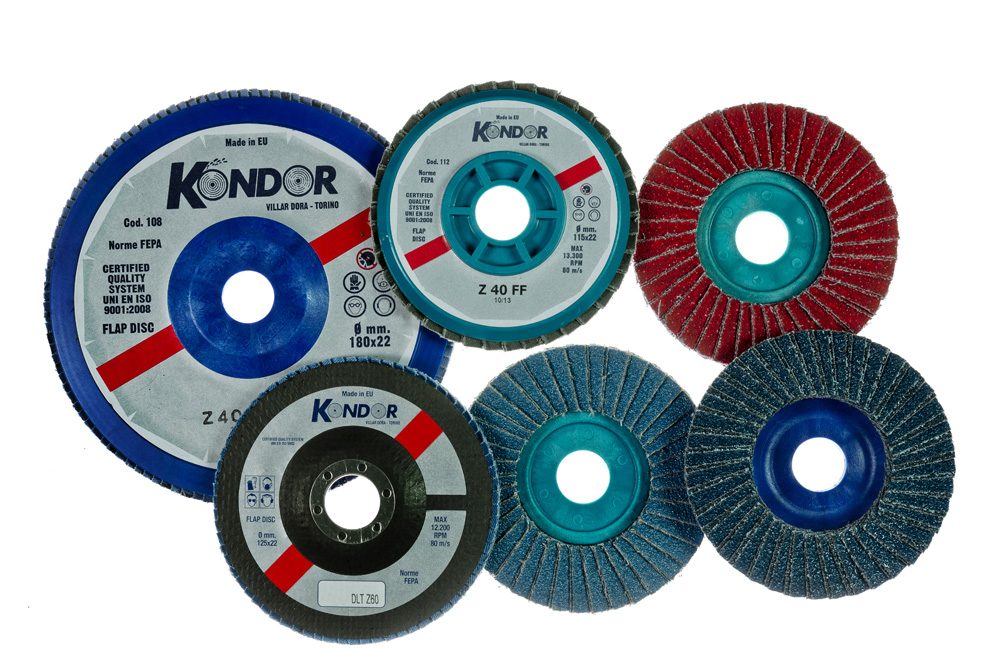
On an angle grinder, two products are mainly used to remove material: the depressed centre grinding disc and the flap disc. They do a similar job, but they are not interchangeable.
The grinding disc
A rigid, thick disc (usually 6–8 mm) that is very aggressive. It is the right choice when there is a lot of material to remove: large weld seams, bevels, cutting burrs, foundry castings, cast iron. It leaves a rough surface that often needs finishing afterwards. It works best at an angle of about 15–30° to the workpiece.
The flap disc
Made of overlapping flaps of abrasive cloth on a backing plate. It grinds and finishes in a single pass: it removes material well but leaves a much smoother surface. It vibrates less, runs cooler and is lighter and quieter, so it is less tiring for the operator. It is ideal for blending welds, bevelling, preparing surfaces for painting and satin finishing. It is used at a lower angle, about 5–15° for flat flap discs.
Summary
| Feature | Grinding disc | Flap disc |
|---|---|---|
| Stock removal | Very high | High |
| Finish | Rough | Good |
| Vibration and noise | Higher | Lower |
| Working angle | 15–30° | 5–15° (flat) |
| Best for | Heavy work, foundries, cast iron | Welds, bevels, preparation and finishing |
Using them together
In heavy work the best combination is often a sequence: the grinding disc first to remove the bulk, then the flap disc to finish. And if you also need to cut, our COMBI discs cut and grind with the same disc, without changing discs mid-job.
Discover our grinding discs and flap discs, or use the product finder to find the right disc for your job.