
Cutting discs for stainless steel: how to choose the right one
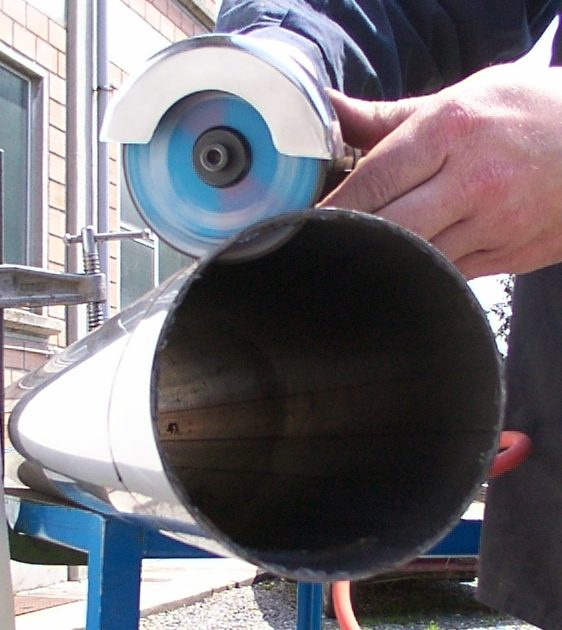
Cutting stainless steel is not like cutting mild steel: it gets hotter, tends to discolour and, above all, must not be contaminated. Here are the four things to check before you fit the disc.
1. Make sure it really is “for stainless steel”
A disc suitable for stainless steel uses an abrasive and bond with a very low iron, sulphur and chlorine content, typically below 0.1%. With an ordinary disc, iron particles can remain on the cut surface and later turn into rust spots: exactly what stainless steel fabricators want to avoid. Look for the INOX marking on the box and on the disc label.
2. Thickness
The thinner the disc, the less material it removes and the less heat it generates: the cut is faster and cleaner, with fewer burrs and less discolouration.
- 1 mm: sheet metal, tubes and thin sections. The fastest, most precise cut.
- 1.6 mm: general use, a good balance between speed and life.
- 2–3 mm: solid bars, heavy sections and demanding jobs that need a sturdier disc.
3. The right diameter for the machine
The diameter depends on the grinder: 115 and 125 mm for one-handed machines, 180 and 230 mm for large ones. Always check that the maximum speed printed on the disc (in m/s and rpm) is equal to or higher than the machine’s speed.
4. How to use it
- Let the disc do the work without forcing it: too much pressure heats the workpiece and wears the disc faster.
- Keep the disc perpendicular to the workpiece: cutting discs must not be used sideways for grinding.
- Always use the wheel guard, safety glasses and gloves.
Our recommendation
For stainless steel we recommend our thin flat cut-off wheels, such as the 9A80T for stainless steel, and our reinforced cutting discs for heavier cuts. Not sure which one you need? Our product finder suggests it in three questions, or ask us for a sample to try.